-
Vidrio fundido en tanques de acero (596)
-
los tanques de acero inoxidables (434)
-
La fusión enlazó los tanques de epoxy (592)
-
Tanques de acero galvanizado (321)
-
Tejados de aluminio de la bóveda (1316)
-
Tanques de almacenamiento de aguas residuales (231)
-
tanques de acero soldados (457)
-
Recipientes del reactor (295)
-
Digestor anaerobio (201)
-
Los tanques de agua industriales (349)
-
Tanques de acero revestidos de vidrio (180)
-
Los tanques de acero empernados (390)
-
El tanque de almacenamiento del barro (115)
-
El tanque de almacenamiento del biogás (173)
-
Tanques de almacenamiento de lixiviación (133)
-
Tanques de almacenamiento de agua agrícola (179)
-
Tanque de agua de fuego (166)
-
Silos de almacenamiento de cereales (146)
-
Proyectos de biogás (425)
-
Proyectos del tratamiento de aguas residuales (788)
-
Techo de doble membrana (223)

|
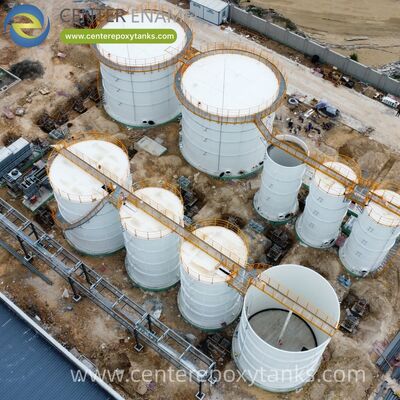
Tanques de acero atornillado como estiércol de ganado de aves de corral Tanques de biogás: diseñados específicamente para soportar altas cargas de amoníaco y orgánicos.
| Lugar de origen: | Porcelana |
| Nombre de la marca: | CEC TANKS |
| Certificación: | ISO 9001:2008, AWWA D103 , OSHA , BSCI |
| Número de modelo: | W. |
| Cantidad de orden mínima: | 1 juego |
| Precio: | $5000~$20000 one set |
| Detalles de empaquetado: | Espuma de polietileno entre cada dos placas de acero; palet de madera y madera |
| Tiempo de entrega: | 10-30 días después de recibir el depósito |
| Condiciones de pago: | LC, T/T |
| Capacidad de la fuente: | 60 juegos por mes |
|
Información detallada |
|||
Descripción del producto
Tanques de acero atornillado como estiércol de ganado de aves de corral Tanques de biogás: diseñados específicamente para soportar altas cargas de amoníaco y orgánicos.
En la industria ganadera y avícola intensiva, la gestión del estiércol es tanto un importante desafío medioambiental como una gran oportunidad para la recuperación de recursos.se caracteriza por su alto contenido de nitrógenoCuando se procesan a través de la digestión anaeróbica, el agua se desprende de la superficie de la planta.Este estiércol produce biogás de alto rendimiento, pero también crea un ambiente químicamente volátil rico en sulfuro de hidrógeno y ácidos orgánicosUn tanque de biogás en este sector debe ser un reactor químico de alto rendimiento capaz de mantener la integridad estructural mientras está sujeto a un ataque corrosivo implacable.
Los tanques de hormigón tradicionales a menudo sufren de "ataque de sulfato", donde la matriz de hormigón se debilita por los subproductos ácidos de la digestión, lo que conduce a fugas y fallas estructurales.los tanques de soldadura en campo son muy susceptibles a la corrosión en las zonas afectadas por el calor de las soldadurasPara garantizar una solución energética fiable y duradera, la industria de la cría ha recurrido aTanques recubiertos de epoxi, específicamenteTanques de acero atornillado con unión epoxiEstos recipientes proporcionan una barrera superior, aplicada en la fábrica que está específicamente diseñada para manejar las altas cargas de amoníaco y orgánicos de desechos de ganado.
Los desafíos químicos y físicos de la digestión del estiércol
Un depósito de biogás para estiércol de aves de corral y ganado debe diseñarse para manejar un perfil único de tensiones corrosivas y mecánicas:
Resistencia a altas concentraciones de amoníaco:El estiércol de aves de corral contiene altos niveles de ácido úrico, que se convierte en amoníaco, que puede ser extremadamente corrosivo para el acero sin protección y puede degradar muchos recubrimientos industriales estándar.
El sulfuro de hidrógeno neutralizante ($H_{2}S$):La digestión de estiércol rico en proteínas genera $H_{2}S$. En el espacio húmedo del tanque, esto puede formar ácido sulfúrico.Una barrera epoxi aplicada en la fábrica es esencial para evitar que este ácido se alimente en el acero estructural.
Gestión de sólidos y grano de alto contenido:El estiércol suele contener material de cama, plumas y arena, y el revestimiento interno debe ser resistente a los abrasivos para resistir el movimiento constante de estos sólidos durante la mezcla.
Integritad de sujeción al gas para la captura de metano:Para que la operación seael desarrollo económicoEl sistema atornillado utiliza selladores especializados de alto rendimiento para garantizar un sello hermético que evita la pérdida de gas y la fuga de olores.
Al proporcionar una barrera molecularmente unida,Tanques recubiertos de epoxigarantizar que el proceso de transformación de residuos en energía siga siendo una parte segura y eficiente de la infraestructura de la explotación.
Excelencia en ingeniería: La barrera epoxi unida por fusión
La fiabilidad de un depósito de biogás de estiércol se basa en el proceso de fabricación del epoxi de unión por fusión (FBE).Este proceso garantiza que cada panel cumpla con estrictos estándares de calidad antes de llegar a la granja.
El proceso comienza con la preparación precisa de paneles de acero de alta resistencia.El polvo de epoxi termoestable se aplica entonces electrostáticamenteLos paneles se curan en hornos especializados a temperaturas extremas, haciendo que el epoxi se derrita, fluya y sufra una reacción química de enlace cruzado con el sustrato de acero.
Esto da como resultado una barrera densa, uniforme e increíblemente resistente que se fusiona molecularmente con el acero.Cada borde y agujero de perforación pre-punchado está completamente encapsuladoEn el sitio, estos paneles se unen utilizando sujetadores especializados de alta resistencia, creando una estructura que es inmune al ambiente químico agresivo de los desechos de ganado.
El valor estratégico detechos de cúpula de aluminio
En los proyectos de transformación de estiércol en energía, el techo debe proteger el proceso biológico y resistir los gases más corrosivos del sistema.techos de cúpula de aluminioes una norma para sistemas de biogás para ganado de alto rendimiento:
Resistencia superior al amoníaco y a los vapores de $H_{2}S$:El aluminio forma naturalmente una capa protectora de óxido que es altamente resistente a estos gases corrosivos, proporcionando una cubierta libre de mantenimiento.
Control de olores y contención de gases:En las zonas de cría de alta densidad, el manejo del olor es fundamental para las relaciones comunitarias.techos de cúpula de aluminioproporcionar un sello seguro y hermético que atrape los olores y asegure que todo el biogás se dirija a la unidad de recuperación de energía.
Arquitectura ligera de espacio claro:El diseño geodésico proporciona una inmensa resistencia estructural sin columnas de soporte internas.Esto elimina las estructuras internas que de otro modo estarían sujetas a una fuerte corrosión o interferirían con el equipo de mezcla especializado requerido para las suspensiones de estiércol..
Protección contra la intemperie y estabilidad del proceso:La cúpula protege el proceso de digestión del agua de lluvia y el viento, ayudando a mantener las temperaturas estables necesarias para una actividad microbiana óptima.
Implementación rápida y escalabilidad modular
Para una operación ganadera, minimizar las interrupciones de la construcción es esencial para el bienestar de los animales y el flujo operativo.Porque los componentes están prefabricados., el ensamblaje in situ es rápido y eficiente, sin necesidad de soldadura in situ, una gran ventaja en entornos agrícolas donde la bioseguridad y la seguridad contra incendios son primordiales.
Además, el carácter modular de laTanque de acero atornillado de acero epoxiSi una granja avícola o ganadera amplía el tamaño de su rebaño o rebaño, estos tanques a menudo se pueden aumentar añadiendo más anillos de paneles.Esta modularidad garantiza que la inversión inicial en infraestructuras siga siendo un activo a largo plazo, proporcionando una solución flexible y sostenible para las necesidades de gestión de residuos de la explotación.
Casos de proyectos: Ejecución comprobada en la gestión de residuos de cultivo
Los siguientes proyectos no ficticios ponen de manifiesto el éxito de la aplicación de nuestro programa de investigación.Tanques recubiertos de epoxien ambientes exigentes para el ganado y los residuos orgánicos:
Proyecto de aguas residuales de cría a gran escala de Shandong:Este proyecto se centró específicamente en la gestión de cargas orgánicas elevadas y de estiércol agresivo.2unidades de tanques para proporcionar una solución de contención segura y duradera para el proceso de digestión.
Proyecto de gas biológico de la Liga Xing'an de Mongolia Interior:Situado en un importante centro agrícola, este proyecto utilizó4En el caso de los residuos agrícolas, el valor de los residuos de los mismos es superior al valor de las unidades de depósito.
Proyecto de planta de tratamiento de aguas residuales de Sichuan Chengdu:Este proyecto de gran capacidad utilizó16El proyecto de construcción de un depósito de residuos urbanos y industriales de gran escala es un testimonio de la estabilidad estructural y de la eficiencia modular requerida para una infraestructura moderna de residuos municipales e industriales.
Conclusión: Una norma de gran alcance para los residuos de reproducción
La gestión eficaz del estiércol de ganado y aves de corral para la producción de energía requiere una infraestructura diseñada para una resistencia química extrema, estanqueidad a los gases y longevidad estructural.Tanque de acero atornillado de acero epoxirepresenta la solución más avanzada para el sector de la cría moderna.
Al proporcionar una barrera de fusión de fábrica que resiste el amoníaco y los ácidos orgánicos e incorporando la protección avanzada detechos de cúpula de aluminio, estos tanques aseguran que los residuos agrícolas se transforman en un recurso seguro y valioso.y una solución escalable que apoye el éxito continuo y la sostenibilidad ambiental de la ganadería mundial.